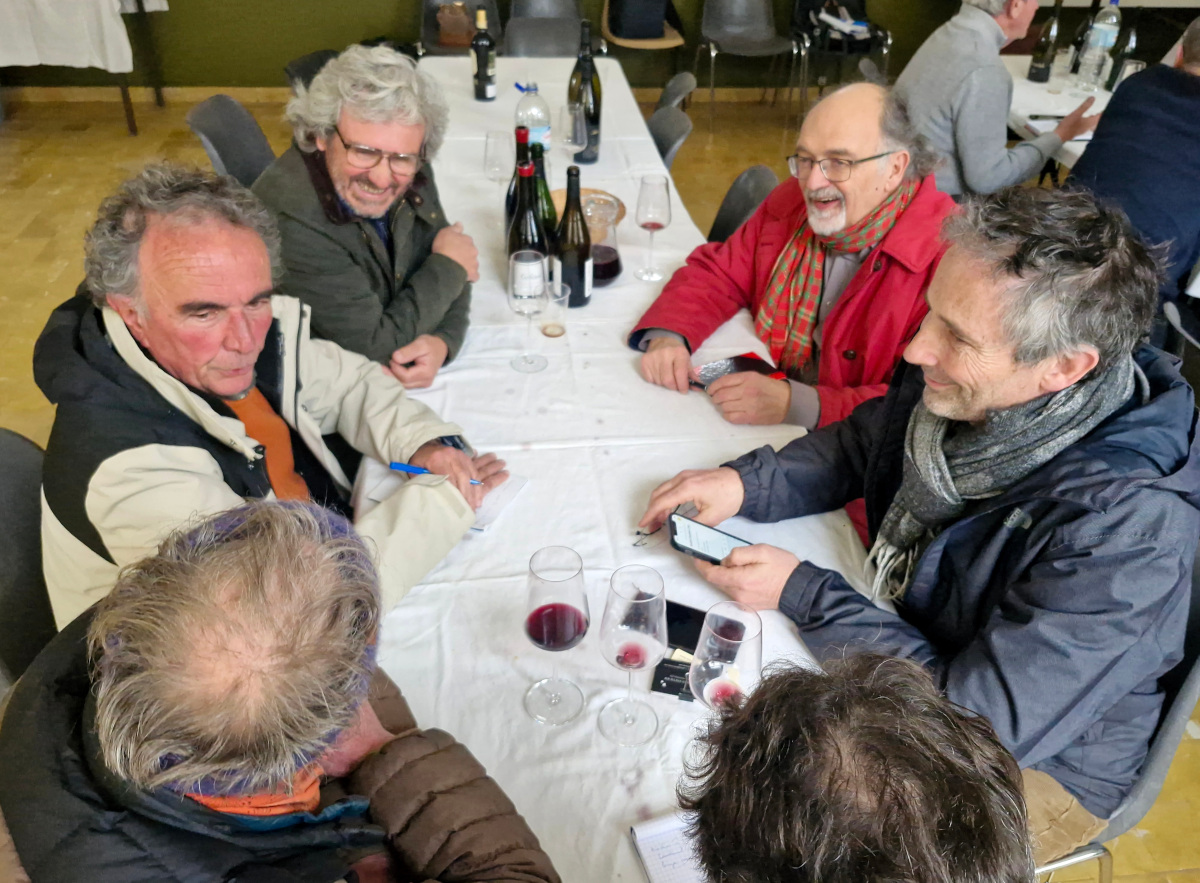
Photo: Winegrowers, including André Domine, upper right, and Justin Howard-Sneyd of RVF, lower right, gather around a table during a breakout session at the Regenerating Roussillon event in Trilla, France.
23 February 2026
On Friday 13 February 2026, as violent winds swept across Roussillon and electricity failed across parts of the region, winegrowers from across the region made their way to the tiny village of Trilla — population 80 — gathering inside the municipal building beside the church and former cooperative building that once symbolized agricultural solidarity.
Nineteen growers were unable to attend due to storm damage. Power was down for hours. And yet, what unfolded in that village hall felt important.
Despite the conditions, a committed group of vignerons came together for the Journée Pro de Vieux Cépages — a full day dedicated to regenerative viticulture and the long-term resilience of Roussillon. As one participant later reflected, “It shows what you can do when everyone pulls together.”
Setting the stage
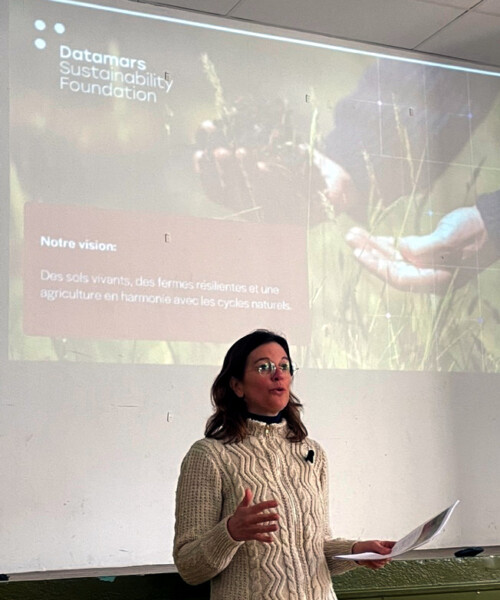
Jessica Villat, CEO of the Datamars Sustainability Foundation, introduces the foundation’s vision for living soils and resilient farms. Photo by Justin Howard-Sneyd.
The day opened with Justin Howard-Sneyd, Master of Wine and board member of the Regenerative Viticulture Foundation (RVF), who framed the urgency of collaboration in a region facing mounting climatic and economic pressures. Roussillon’s challenges, he emphasized, cannot be addressed in isolation. They require coordinated action across valleys, slopes, and appellations.
Jessica Villat, CEO of the Datamars Sustainability Foundation, followed with a systems-based introduction to regenerative viticulture. With over a decade of work at the intersection of soil and water — and a Harvard master’s thesis focused on regenerative viticulture — she grounded the discussion in one core principle: in Mediterranean climates, water security begins in living soils.
[Download Jessica’s Regenerative viticulture in Roussillon – presentation 2026 (PDF, French, ~5MB).]
A double water crisis
Roussillon faces pressure from both directions: rising salinity in coastal aquifers, and longer droughts punctuated by intense rainfall and wildfire. The drought–fire–flood cycle is closely tied to soil degradation. When soils lose organic matter and structure, rain runs off instead of infiltrating, aquifers recharge less, irrigation increases, salinity concentrates, and vines suffer osmotic stress.
One figure reframed the discussion: an increase of 1% in soil organic matter can store up to 230,000 additional liters of water per hectare. The issue is not simply rainfall. It is how quickly water leaves the landscape.
Irrigation is not a sustainable answer
A central message of the morning was direct: rapid or indiscriminate adoption of irrigation is not a sustainable solution to Roussillon’s water crisis. On degraded soils, irrigation can intensify long-term vulnerability — concentrating salts, increasing aquifer pressure, and reinforcing dependency — particularly when applied without parallel efforts to restore soil function.
The deeper issue is not water scarcity. It is loss of soil function. What is needed is regenerative hydrology — restoring the soil’s natural ability to slow water, infiltrate water, store water, and recharge groundwater. Resilience in Mediterranean systems does not come from pumping more water; it comes from rebuilding soils that hold it. This marks a shift from managing water as an input to restoring water as a cycle.
This does not imply that irrigation has no role to play. In certain contexts — particularly during vineyard establishment or extreme drought stress — carefully managed irrigation can support plant survival and root development. The longer-term objective, however, is to rebuild soil function so that water retention, infiltration, and vine resilience increasingly come from biological processes rather than external inputs.
Three practical levers
Villat focused on three interconnected pathways to restore soil function and hydrological resilience:
-
Living roots and cover crops: Continuous living roots feed soil biology, improve aggregation, and increase infiltration. In water-stressed regions, their hydrological role is paramount.
-
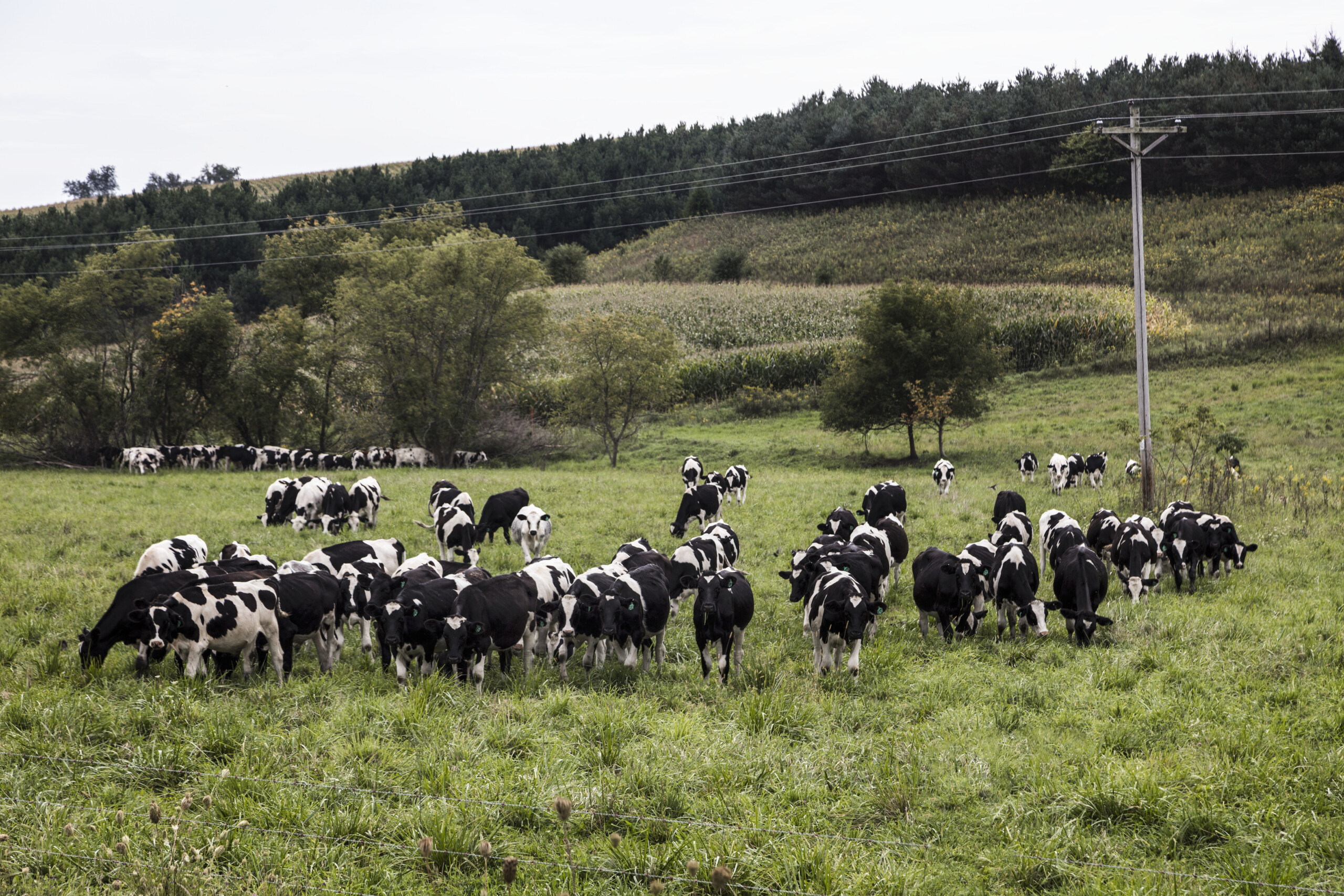
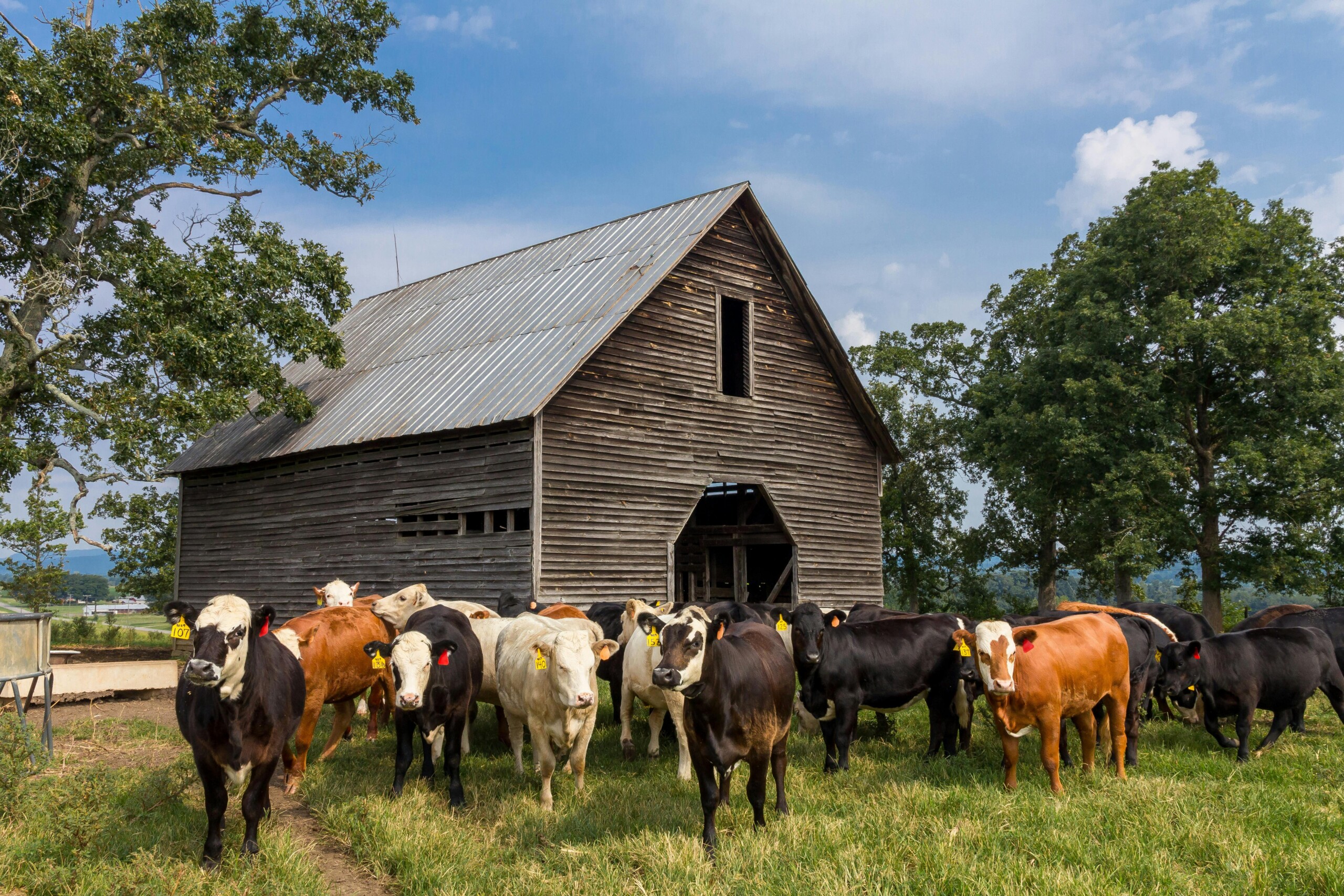
Regenerative animal integration: Thoughtfully managed grazing stimulates plant growth, root exudation, and microbial life. When integrated correctly, animals accelerate soil aggregation and water retention. The objective is not simply to add livestock, but to reintroduce biological cycles that strengthen soil structure — a core focus of the Datamars Sustainability Foundation’s work.
-
Landscape coordination: Water does not respect property lines. Coordinated action across vineyards, forests, and slopes enables landscapes to function as hydrological systems rather than fragmented parcels. As emphasized during the day: you do not regenerate a vineyard alone. You regenerate a landscape together.
Field experience and regional perspectives
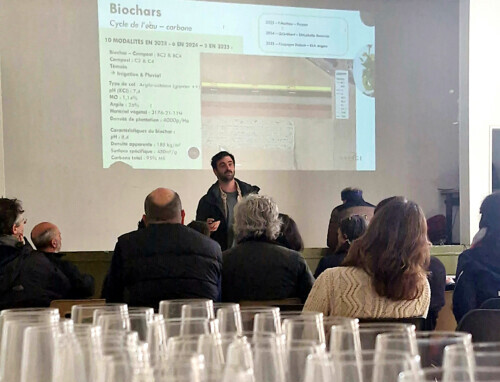
Antoine Lespès of Domaine Lafage shares results from biochar and soil trials with winegrowers during a technical session at the Regenerating Roussillon event in Trilla.
The morning continued with practical perspectives. Antoine Lespès (Domaine Lafage) shared five years of experimentation adapting regenerative approaches to Roussillon’s diverse micro-terroirs. Roger Rovira Roca (Recaredo, Catalonia) explored the relationship between biodynamics and regenerative viticulture, highlighting shared principles around soil vitality.
Together, these contributions reinforced a key message: regeneration is not a single technique. It is a systems approach grounded in observation and adaptation.
Measuring what matters
Regeneration must be observable. It begins with simple indicators: does water infiltrate after rain, is the soil friable and structured, are earthworms present, does the soil remain cooler in summer. Some changes appear within a season. Others take years. Both matter. Often, restoring soil function costs less than compensating for its loss.
From dialogue to direction
After a locally prepared lunch — served despite the electricity outage — the afternoon shifted into working groups focused on water, polyculture, and transition strategies. Discussions were pragmatic and forward-looking. Participants explored coordinated experimentation and regional collaboration. There was a shared sense that something had begun.
A seed in the storm
Storms test infrastructure. They also test communities. In Trilla, under difficult conditions and without electricity, winegrowers gathered to confront a deeper instability — the fragility of water in Mediterranean landscapes. What emerged was not a call for more inputs, but a call for regeneration.
In Mediterranean viticulture, resilience starts below ground. And in a village of 80 inhabitants, a serious conversation about regenerative Roussillon began — grounded in living soils, regenerative animal integration, coordinated action, and regenerative hydrology as the foundation for the future.
About the Datamars Sustainability Foundation
The Datamars Sustainability Foundation (DMSF) is a nonprofit that supports farmers, ranchers, and pastoralists in adopting regenerative practices that build landscape resilience and strengthen agricultural communities. Our co‑created projects honor the people who regenerate the land, reframe animals as regenerative allies, and are focused on outcomes rooted in living systems. Through co‑creation and partnerships around the world, DMSF builds soil health and restores connection between land, people, animals, plants, health, and purpose.