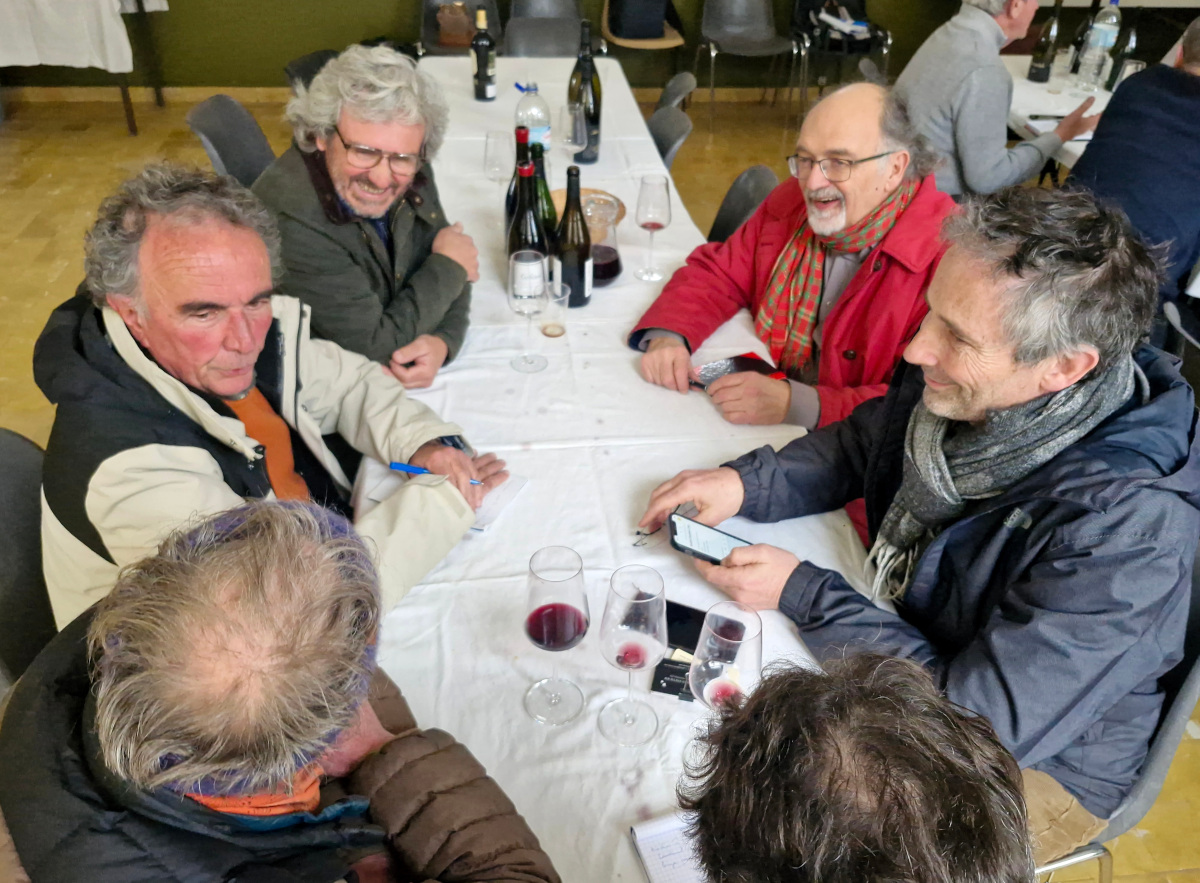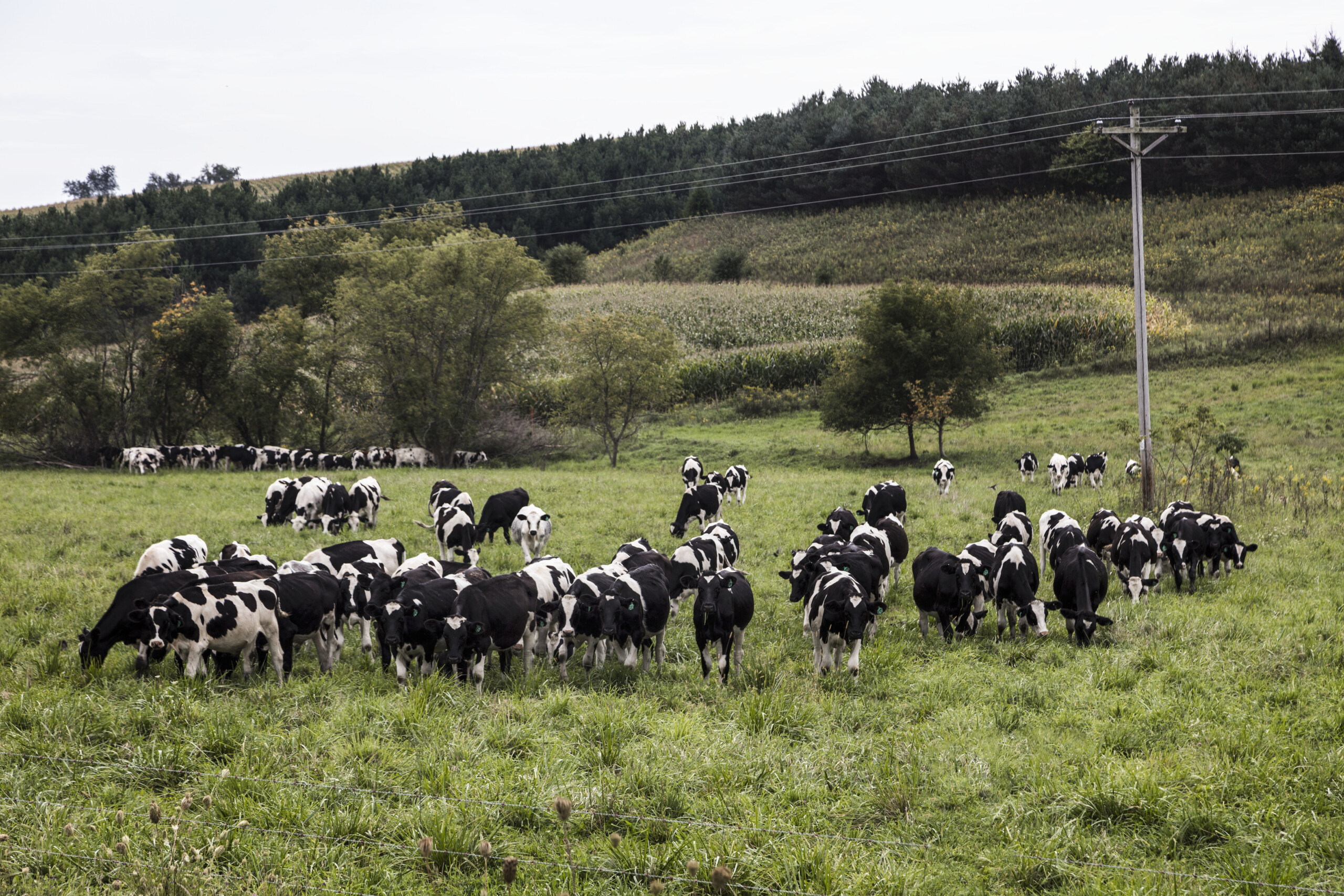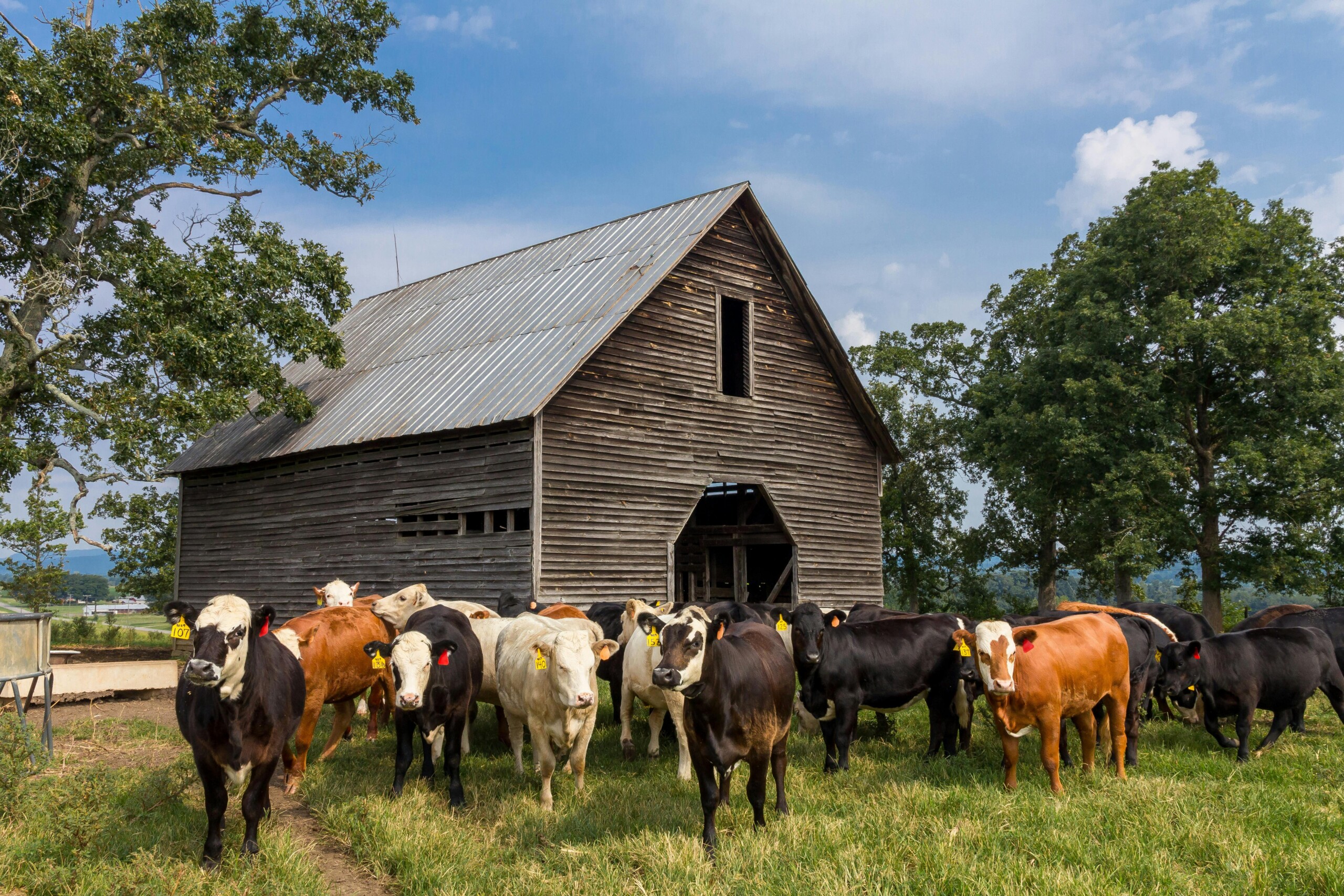
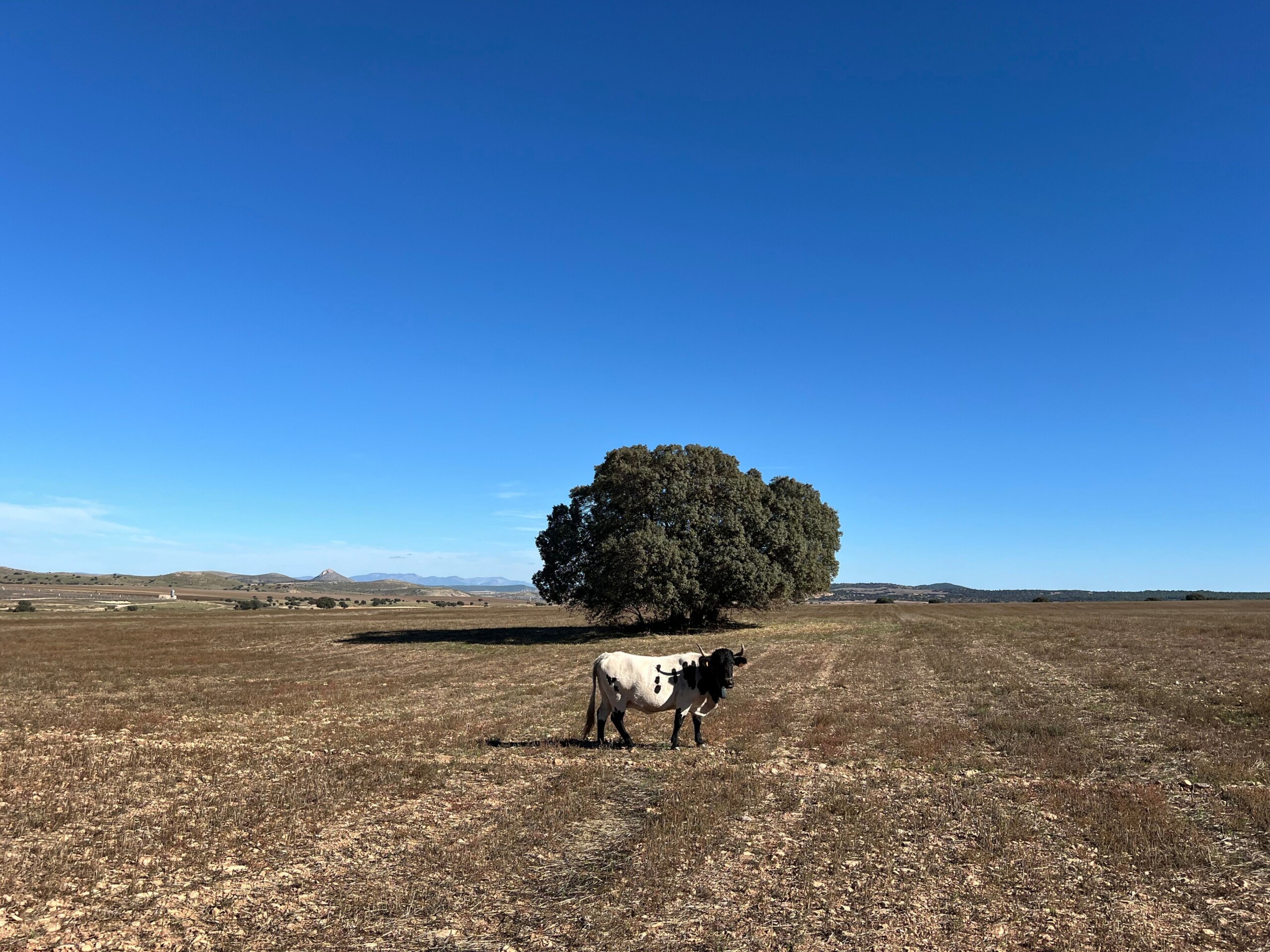
Photo by Investing in Regenerative Agriculture and Food; La Junquera Farm, Oct 2025.
9 December 2025
“[Without virtual fences] we couldn’t have cows. Or we could have cows, but we would have to feed them … six months of the year or something. With this, they’re always outside, they’re always grazing.” — Alfonso Chico de Guzmán
Reintroducing cows to a dryland farm in Spain: regenerative grazing with virtual fencing
What does it take to bring cows back onto a large, extremely dry arable farm where everyone insists they will never survive outdoors year-round? In this Walking the Land episode of Investing in Regenerative Agriculture and Food podcast, host Koen van Seijen visits Spanish farmer Alfonso Chico de Guzmán at La Junquera farm. They explore how a “small hobby” with three native-breed calves has evolved into a resilient, landscape-scale grazing system supported by virtual fencing technology.
Recorded at around 1,100 meters above sea level on an exposed plateau in the Altiplano region of Murcia in south‑eastern Spain, the conversation follows Alfonso across a 90 hectare plot of arable land with steep slopes planted with almonds and aromatic plants, and oak‑dotted mountain pastures now shared with around 100 hardy cows and their calves. Together, they unpack how integrating animals, water harvesting, and simple but powerful ag‑tech can stabilize soils, restore water cycles, and spur new business models in a region hit by repeated drought and climate extremes.
Regenerative agriculture on a high, dry landscape
Alfonso farms in one of the driest, rockiest areas of Spain, where rain is highly variable and often arrives as intense autumn storms. In recent years the farm experienced three of its worst seasons on record, followed by a year with about 400 millimeters of rain—enough to produce the best harvest yet of grains, almonds, and aromatic crops, but still low by most European standards.
To cope with this volatility, the farm has shifted from a purely arable model towards a more diversified, regenerative system. Annual grains are still important, but erosion‑prone slopes and degraded areas are being planted with perennial species such as almond trees, Spanish lavender, and rosemary. The trees and shrubs help stabilize soils and improve water retention, while the aromatic herbs also supply an on‑farm essential oil enterprise. Across the property and surrounding leased land, roughly 150 small ponds and swales now slow runoff, capture short, intense rain events, and reduce erosion and fire risk.
This physical infrastructure provides the foundation for reintroducing grazing animals at scale. The question that drives the episode is whether cows—once written off as impossible in such a dry context—can become key partners in regeneration, rather than liabilities, when paired with thoughtful management and enabling technology.
From hobby herd to regenerative livestock enterprise
Alfonso’s cattle journey began almost by accident. After a lunch with conservationists and a local priest campaigning to save the endangered Murciano‑Levantina cow, he agreed—after “a few beers,” as he tells it—to buy three calves to help preserve the breed. Those first animals lived near the family’s horses and later in a small, fenced paddock, where Alfonso initially fed them daily. A long trip one Christmas forced him to stop supplementary feeding for two weeks; he returned to find the animals fatter and more resilient, having learned to forage on their own.
From that point, the herd slowly expanded, with Alfonso experimenting across different parcels, talking with neighbors, and visiting other farms to understand what might work in this particular climate and on these soils. About ten years in, he found himself with around 25 cows: too many for a casual hobby, but not enough to justify dedicated labor and infrastructure. Hiring a young cowboy, Ismael, proved a turning point. Within weeks, Ismael told him the management system would only make sense with a much larger herd.
Today the operation runs roughly 100 cows and 50 calves, combining the rare Murciano‑Levantina with other tough local mountain breeds sourced carefully from similarly challenging environments. Calves born on the farm adapt better than incoming animals, quickly learning what to eat, how to navigate the rocky terrain, and how to cope with long daily walks and sparse forage. Over time, Alfonso hopes to grow to 300–500 cows, mainly through keeping home‑bred heifers, to avoid the adaptation challenges associated with animals raised in softer, wetter regions.
Virtual fencing: enabling adaptive grazing on dryland arable farms
One of the most important tools in Alfonso’s system is virtual fencing—a GPS‑based collar system that uses sound cues (and, if needed, mild electric stimuli) to hold cattle inside digital paddocks drawn on a mobile app.
On this farm, traditional temporary fencing is almost impossible. The ground is so hard and stony that it can take a week to set posts for a 50‑hectare paddock—an area the herd might graze in just a few days. With virtual fencing, Alfonso and Ismael can adjust paddocks from their mobile phones, reshaping boundaries as forage conditions change and moving animals across large landscapes, including unfenced neighbor properties where they have grazing agreements. Horses and dogs are still used for longer moves between distinct farms, but day‑to‑day rotations are handled digitally.
Connectivity is a constraint: weak mobile signals in the mountains mean paddocks must often be larger than ideal, limiting the ability to create tight, high‑impact grazing cells. Even so, virtual fencing has made possible what physical fences and a limited workforce could not: year‑round outdoor grazing across thousands of hectares, including wetlands, reed beds, and post‑harvest grain fields that would otherwise be unmanaged or left as fire hazards.
How cows improve soil, water, and fire resilience
Although the herd is still relatively young, the ecological impacts of reintroducing cows are already visible in several parts of the landscape. In a previously neglected wetland area owned by a neighbor, dense reeds had built up over years, first burned annually and then left unmanaged after burning was restricted. By moving the cows in with virtual fencing, Alfonso and Ismael were able to knock back old, lignified biomass, open up the stand, and stimulate a richer mosaic of regrowth. Local bird‑watchers, initially cautious, now see improved habitat conditions and lower fire risk.
On dryland crop fields, cows play a complementary role to arable production. In years when drought prevents grain from forming properly, or when crops are too short to harvest with a combine, the herd can graze the standing biomass and crop residues, converting otherwise lost production into beef and manure. Even during the three worst drought years on record, the farm still had enough standing biomass and residues to feed the cows with minimal purchased feed—while grain yields alone would not have justified the land use.
Across the farm, cattle are increasingly integrated into a broader water and landscape management strategy: trampling crop residues into the soil surface, fertilizing future perennial pastures, and using otherwise unharvestable biomass—such as failed grain, rough forage, and reeds—to help keep soil covered and productive around the network of roughly 150 ponds and swales. As sheep numbers in the region have collapsed from an estimated 120,000 animals to around 10,000, Alfonso sees this kind of managed cattle grazing as one of the only viable ways to keep fuel loads in check and reduce wildfire risk across the wider landscape.
Genetics, animal welfare, and market challenges
The episode also tackles the practical realities of breeding and marketing cattle in such a harsh environment. Not all genetics are suited to this context. Bulls raised on lush lowland grass, with minimal walking and smooth terrain, can struggle when moved to Alfonso’s hills; one older Angus bull, brought in to accelerate cross‑breeding, suffered a hoof injury on a long move and never fully recovered. The lesson for future herd development is clear: raise animals on the home farm or buy them young from similar landscapes and allow them time to adapt.
Horned local breeds, while sometimes seen as inconvenient in more intensive systems, bring advantages here. When dogs approach the herd during moves, cows with calves naturally form a defensive ring, horns outward, offering better protection if wolves re‑establish in the region. This is not hypothetical: a lone wolf has already been seen locally, and there have been attacks on sheep and even dogs on neighboring farms.
On the market side, Alfonso currently sells most animals into conventional channels at standard prices, including calves that may go on to feedlots elsewhere and older cows whose meat is appreciated by local butchers. Building a differentiated, regenerative, grass‑based beef brand that reflects the ecological value of this management is an important next step, but not a trivial one in a region where finishing conditions and consumer awareness are both variable. Potential pathways include partnering with butchers and short supply chains that value older, flavorful animals and exploring collaborations with grass‑rich regions for finishing younger stock.
Why this dryland regenerative livestock story matters
Alfonso Chico de Guzmán’s story adds a crucial dryland, mixed‑farming perspective to the Role of animals series. Many discussions of regenerative grazing focus on relatively forgiving climates with ample rainfall and perennial pastures; this episode shows what it looks like to integrate cows into an arable‑dominant, drought‑prone landscape where physical fences are impractical, and climate risk is high. Listeners will find in this episode a grounded, hopeful example of how animals, people, and carefully chosen technology can work together to regenerate even the most “impossible” drylands.
Listen to the full episode to discover how regenerative grazing, water‑harvesting earthworks, and context‑appropriate ag‑tech are helping Alfonso Chico de Guzmán reimagine cattle on one of Spain’s driest arable farms.
Find all episodes in this series on the DMSF Podcast Hub.
The Role of animals in the food and agriculture system of the future podcast series is co-created and supported by the Datamars Sustainability Foundation. Discover more about our ongoing projects and join the conversation about building regenerative food systems for the future.
The Datamars Sustainability Foundation (DMSF) is a nonprofit that supports farmers, ranchers, and pastoralists in adopting regenerative practices that build landscape resilience and strengthen agricultural communities. Our co-created projects honor the people who regenerate the land, reframe animals as regenerative allies, and are focused on outcomes rooted in living systems. Through co-creation and partnerships around the world, DMSF builds soil health and restores connection between land, people, animals, plants, health, and purpose.