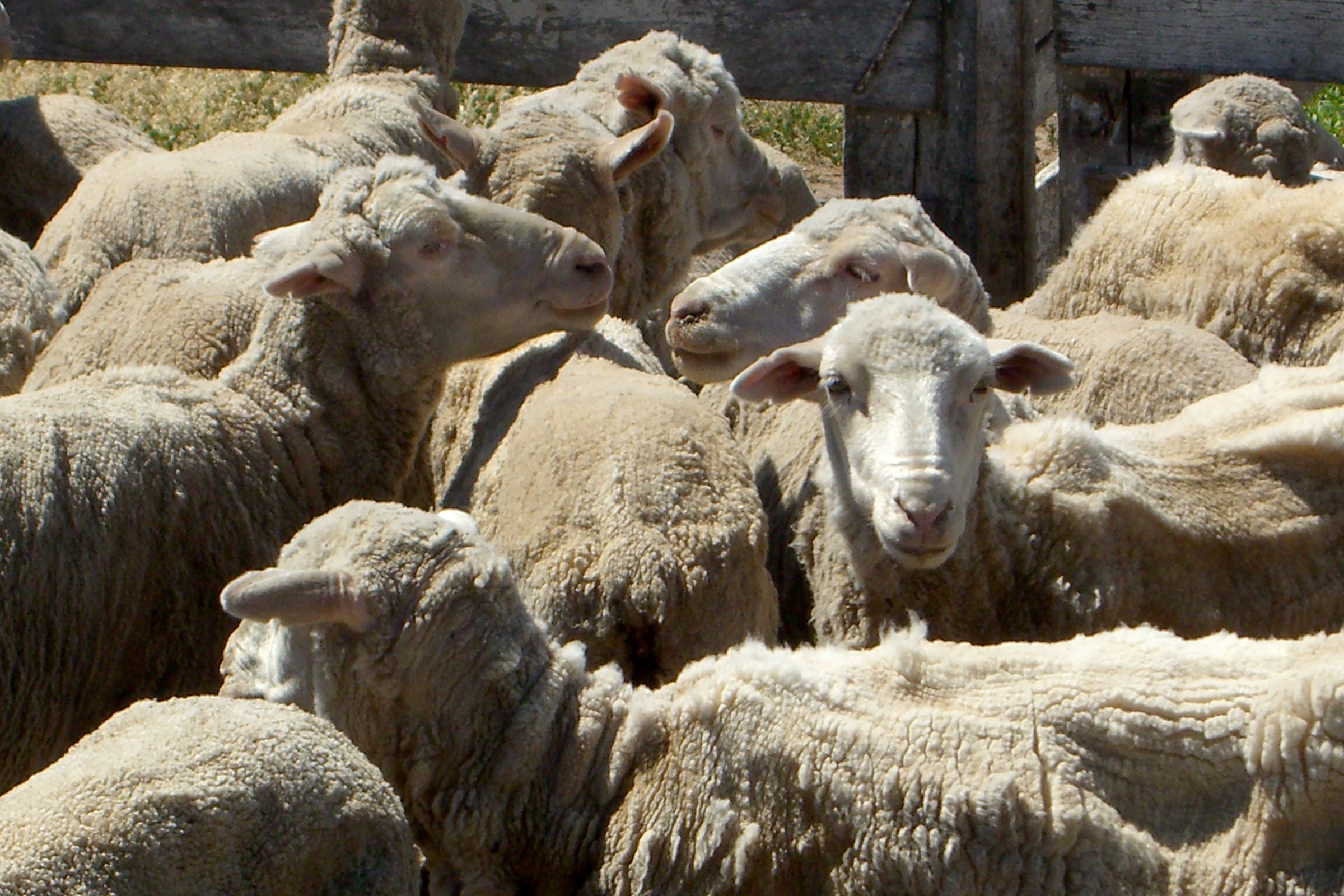
Photo: By Jason Hollinger – Patagonian Sheep; Uploaded by Amada44, CC BY 2.0
23 April 2026
“The first grazing-based carbon credits in Argentina and probably the whole of Latam have been issued. It sounds so easy. Managing livestock holistically brings immense benefits to the soil, to the land, to the people, to the animals, and to the bottom line of farmers. But why are not more livestock farmers or all livestock farmers doing that?” – Koen van Seijen, episode introduction
What does it take to turn holistic grazing from a promising idea into a financially meaningful transition pathway for farmers? In this episode of The Role of Animals in the Food and Agriculture System of the Future podcast series, co-produced with Investing in Regenerative Agriculture and Food, host Koen van Seijen speaks with Argentine economist and regenerative agriculture entrepreneur Pablo Francisco Borrelli about the long journey behind the first grazing-based carbon credits in Argentina and likely all of Latin America.
Pablo’s story is rooted in Patagonia, where his father spent decades trying to reverse degradation in sheep systems using the standard advice of the time: reduce stock numbers. But despite careful monitoring and repeated efforts to destock, many farms continued to spiral downward, with less grass and fewer animals each year. The breakthrough came when the family tried holistic planned grazing and saw, within a single spring and summer, that bunching animals, planning rest periods, and focusing on plant recovery could change the trajectory of the land.
From reducing stock to understanding overgrazing
A core lesson in the episode is that overgrazing is not simply about having too many animals. Pablo explains that overgrazing happens when a plant “hasn’t been able to recover from the last grazing and it’s grazed again.” That shift in understanding changed his father’s work as an agronomist and helped move the family away from treating animals as the problem and toward using grazing as a tool for regeneration.
This matters in a place like Patagonia, where Pablo describes vast areas of steppe that are highly degraded and increasingly abandoned. In that context, animals are not just part of the story economically; under thoughtful management, they become part of how ecological function can be rebuilt.
A family journey toward practical regeneration
Pablo did not begin his career in agriculture. He studied economics, worked in airline revenue management, and later says he “connected with the purpose of regenerating land and how that is attending the root cause of many other problems that we see on the surface later.” That led him to join his father’s work and focus on a practical question: “what’s the problem, how we can solve it.”
From there, the work expanded from education to on-farm services and eventually to carbon projects. Along the way, the family helped build Ovis 21, developed holistic management training for Spanish-speaking farmers and advisors, and created networks of field professionals who could support change directly on farms. The conversation highlights that regenerative transition is not just about ideas; it depends on people, local support, and long-term learning on the land.
Why carbon became the ‘low hanging fruit’
Before focusing on carbon, the team explored ways to link ecological outcomes to products such as wool, beef, and leather. But Pablo says those pathways proved difficult to scale, and that “if we want to get the farmers paid for outcomes, carbon is the most ready to go market.” He adds simply: “right now, carbon, it’s the low hanging fruit.”
That conclusion led to the creation of Ruuts, designed to connect holistic grazing transitions with carbon finance. The first idea was to create their own credits independently, but larger buyers pushed back and demanded recognized certification. Pablo recalls: “They were like, bring me international certification, or, there’s nothing there. So we say, okay, we have to go the long way with Verra.”
A long road to first issuance
That “long way” meant years of development work under recognized methodologies, including baseline measurements, modelling, and planning for future remeasurement. Pablo describes the journey plainly: “It was difficult, very painful,” especially for a small organization managing expectations across farmers, advisors, and its own team.
Still, the work eventually delivered a major milestone. As Pablo says, “Right now we are at the end of that journey with the first issuances… it’s a huge milestone for us that… the credits are there and now the next challenge is selling them.” The episode gives listeners a rare look at what it really takes to build finance around ecological outcomes in livestock systems.
Carbon is not the main story
One of the strongest themes in the conversation is that carbon is useful precisely because it is not the whole point. As the episode intro puts it, “this isn’t about carbon. It can be a great Trojan horse to sit at the table with farmers and nudge them towards management changes, which lead to much more biodiversity, water storage capacity, financial freedom, and yes, do a lot more carbon in the soil.”
Pablo is also clear that quality matters. He warns that the market still has to learn “how it’s gonna differentiate high quality from low quality,” because “it’s not a checklist.” For him, meaningful projects depend on observing what is actually happening on the land, not just what is being claimed on paper.
Listeners will find in this episode a grounded and honest story about regeneration in practice: a story of degraded grasslands, family persistence, animals as tools for renewal, and the challenge of creating financial systems that reward real outcomes.
Find all episodes in this series on the DMSF Podcast Hub.
The Role of animals in the food and agriculture system of the future podcast series is co-created and supported by the Datamars Sustainability Foundation. Discover more about our ongoing projects and join the conversation about building regenerative food systems for the future.
The Datamars Sustainability Foundation (DMSF) is a nonprofit that supports farmers, ranchers, and pastoralists in adopting regenerative practices that build landscape resilience and strengthen agricultural communities. Our co-created projects honor the people who regenerate the land, reframe animals as regenerative allies, and are focused on outcomes rooted in living systems. Through co-creation and partnerships around the world, DMSF builds soil health and restores connection between land, people, animals, plants, health, and purpose.